Whose Riser Is It Anyway? The Hidden Network Risks of Leasing Space in Shared-Infrastructure Buildings
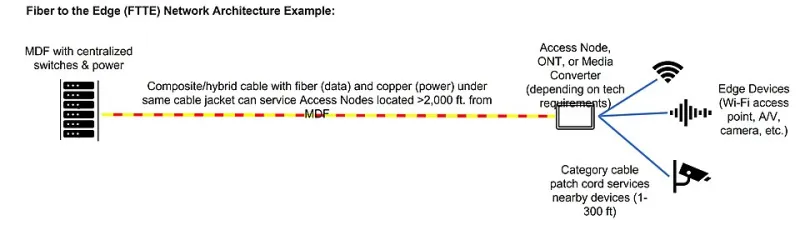
Photo: DNMAC, CC BY-SA 4.0, via Wikimedia Commons
The Network You Don't Own
Enterprise network engineers spend countless hours designing redundant topologies, automating failover, and tuning SD-WAN policies — then move into a building where a condo association or property manager controls the fiber entrance, the riser conduits, and the main distribution frame. In shared-infrastructure buildings across the US, from Class A office towers in Chicago to mixed-use developments in Austin, the physical layer that carries your traffic often sits outside your administrative control entirely.
The result is a category of outage and constraint that no amount of software-defined cleverness can route around. If the riser is full, the entrance conduit is monopolized by a single carrier, or the landlord's preferred vendor holds an exclusive access agreement, your redundancy strategy may be fiction on paper.
The Single-Fiber Trap
The most common and most expensive discovery is carrier diversity that exists only in a spreadsheet. Many American commercial buildings — particularly older high-rises and suburban office parks — have exactly one fiber provider with physical control of the entrance facility. Competing carriers can deliver service only by leasing that incumbent's conduit or lit capacity, which means your "diverse" circuits from two different providers may ride the same bundle of glass through the same manhole.
A proper carrier audit goes beyond asking which providers are on the building's vendor list. It means walking the entrance facility with the building engineer, reviewing as-built drawings, and tracing where each provider's cable actually enters the structure. Buildings with a single lateral to a single meet point have a failure domain that includes every tenant in the tower — and every circuit you thought was independent.
Lease Clauses Are Network Documents
Most network engineers never read the lease. They should — or at least, they should sit at the table when it's negotiated. The clauses that matter are unglamorous: access rights to riser spaces, the right to install and maintain your own cabling, license fees for conduit usage, and whether the landlord can grant competing carriers access on reasonable terms.
Key provisions to push for include:
- Riser access rights that let your cabling contractor work in the vertical distribution spaces with reasonable notice, not landlord-discretionary approval
- Non-exclusivity language preventing the landlord from signing exclusive access agreements that lock out additional carriers
- Cable ownership and removal rights, so your fiber remains yours — and removable — when the lease ends
- Restoration timelines obligating the building to repair damaged infrastructure within a defined window
Teams that skip this step have arrived at move-in day to learn that running a redundant link up the riser requires a six-month approval process, a $40,000 conduit license fee, and a contractor from the landlord's short list. By then, the negotiating leverage is gone.
Horror Stories from the Riser
Ask around and the pattern repeats. A financial services firm in Manhattan discovered during a buildout that its "dedicated" dark fiber shared a duct bank with the carrier providing its backup circuit — a fact the building's own drawings made clear, had anyone requested them. A healthcare tenant in Phoenix spent eleven weeks negotiating riser access for a redundant WAN handoff while a construction crew two floors up had already severed its primary path once.
The common thread is timing. These discoveries surface during outages or buildouts, when every day of delay carries business cost, rather than during due diligence, when a clause in a lease costs nothing to add.
Making Shared Infrastructure Work
None of this means enterprises should avoid landlord-controlled buildings. It means treating the building itself as a network element — one with documented dependencies, access constraints, and failure modes. Practical steps include:
- Audit before you sign. Request entrance facility drawings, carrier inventories, and riser capacity assessments as part of due diligence.
- Negotiate the physical layer. Access rights, non-exclusivity, and restoration terms belong in the lease, not in a handshake with the property manager.
- ** engineer diversity creatively.** Where the riser is truly constrained, fixed wireless, satellite, or an SD-WAN overlay over LTE can provide path diversity that bypasses the building entirely.
- Maintain relationships. The building engineer and property manager hold more operational power over your uptime than most of your vendors. Treat them accordingly.
Software Can't Fix Concrete
SDN gives enterprises unprecedented control over logical topology — but only above the physical layer it rides on. In shared-infrastructure buildings, that layer belongs to landlords, condo boards, and property managers who neither know nor care what SDN stands for. The engineers who succeed are the ones who learn to negotiate conduit rights as fluently as they configure controllers, and who audit the concrete before the software ever gets deployed.