The $18,000 Handshake: What Really Happens Between the Street and Your Switch
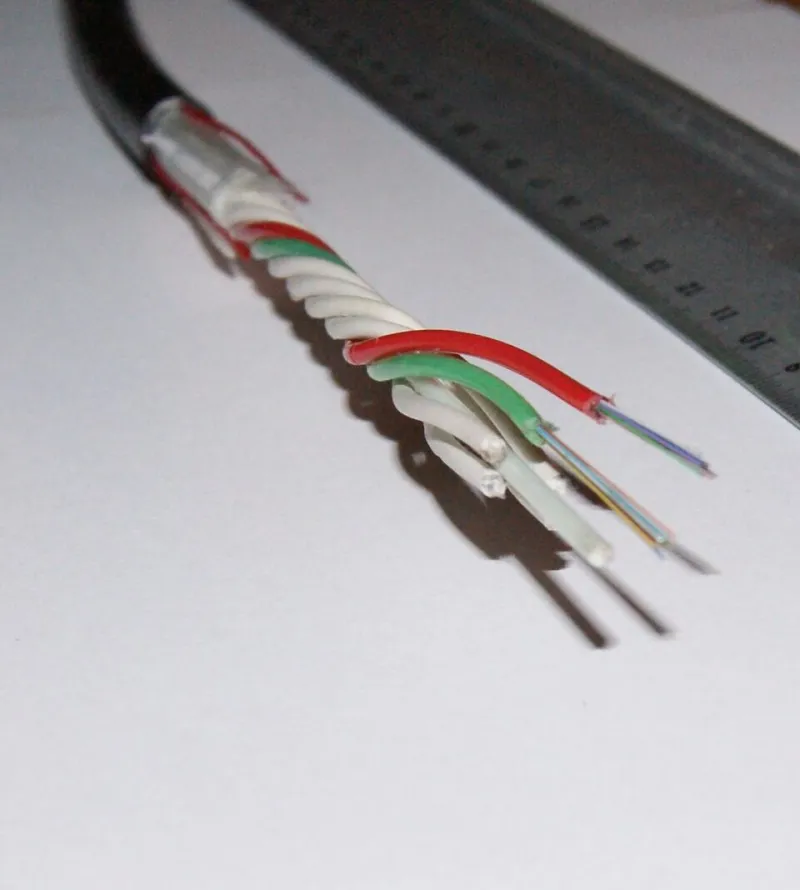
Photo: Asurnipal, CC BY-SA 4.0, via Wikimedia Commons
The circuit quote looked clean. Ten gigabits, three-year term, a competitive monthly rate your procurement team celebrated. Then the carrier's provisioning team contacted the building management office, and within two weeks a new set of invoices began arriving: a riser access agreement, a cross-connect charge, a one-time 'building entry' fee, and a construction line item nobody had budgeted for.
This scenario plays out daily in commercial buildings across the United States, and it catches even experienced network managers off guard. The monthly recurring charge gets all the negotiating attention, but the non-recurring charges — the NR Cs buried in the order process — frequently add $10,000 to $40,000 to a single circuit deployment in a typical multi-tenant office building. Understanding who controls each segment of that last few hundred feet is the difference between a predictable deployment and a budget surprise.
The Anatomy of a Building Handoff
A carrier circuit entering a multi-tenant building traverses three distinct zones, each with its own owner, its own fee structure, and its own leverage dynamics.
The entrance facility. This is where the carrier's conduit meets the building shell — typically through a foundation penetration or a vault on the property. If the building has never been serviced by your chosen carrier, this is where the expensive surprises live. Boring or trenching a new entrance can run $15,000 to $50,000 depending on the substrate, and carriers will pass that cost through unless the term length justifies absorbing it.
The riser. Vertical pathways — conduit, cable trays, or shafts — carry cabling from the entrance to each floor. In most US commercial buildings, the riser is controlled by the landlord or building management, even when the physical conduit was installed by a carrier. Access is governed by a riser access agreement, and landlords have learned that this control is monetizable.
The point of demarcation. The carrier hands off service at a demarcation point, usually in the building's main point of entry (MPOE) or a shared telecom room. Getting from the demarc to your actual suite requires either the carrier extending the circuit (for a fee) or your own cross-connect through the building's meet-me infrastructure.
The Fee Inventory
Here are the charges most likely to appear on your provisioning paperwork, with typical US market ranges:
- Riser access agreement fee: $500 to $2,500 one-time, plus possible annual per-carrier fees. Some landlords charge carriers, who pass it through; some charge the tenant directly.
- Cross-connect fee: $150 to $500 per month at carrier hotels and premium interconnection facilities; $300 to $1,500 one-time in standard office buildings. In a carrier-neutral data center, expect the recurring model with monthly billing.
- Building entry construction: $2,000 to $50,000+ if no diverse entrance exists for your carrier.
- Inside wiring / extended demarc: $1,500 to $10,000 to run from the MPOE to your floor, depending on distance and whether existing spare conduit is available.
- Landlord approval and supervision fees: Some property management firms charge an hourly 'engineering review' rate simply to approve the carrier's work — a line item that surprises tenants who assumed landlord cooperation was free.
On a typical enterprise deployment in a Class A office tower, these items can total $8,000 to $25,000 before a single byte flows. In buildings where the carrier has no existing presence, the total can double.
Who Actually Controls the Riser?
This is the question to answer before you sign the master service agreement (MSA), not after. The answer varies:
In older buildings, the riser may be genuinely common infrastructure under local building code, with landlords obligated to provide non-discriminatory access under FCC rules governing competitive carriers. In newer or aggressively managed buildings, exclusive marketing agreements are common — the landlord has a preferred carrier, and that carrier gets favorable riser terms while competitors face construction charges and slow approvals.
The practical consequence: the carrier with the best monthly price may be the one facing a $30,000 entrance build, while a competitor already in the riser can deliver in three weeks with minimal non-recurring charges. Your procurement process should ask every bidder the same question: do you have facilities in this building today, and if not, what is your total non-recurring build estimate?
Negotiating Before You Sign
The leverage window closes once the MSA is signed. A few tactics that consistently work in US commercial negotiations:
Make NR Cs a bid criterion. Require each carrier to submit a fully loaded 'first-year cost' that includes all one-time charges, riser fees, and construction estimates. Carriers with existing in-building facilities will suddenly look very different from their monthly-rate quotes suggest.
Push construction risk onto the carrier. For longer terms, negotiate a waiver of construction charges or a firm not-to-exceed cap. Carriers routinely absorb build costs for 36-month terms; they simply don't volunteer the offer.
Get the landlord involved early. A tenant's lease may already include telecommunications access rights — language granting tenants the right to reasonable carrier access. Facilities and legal teams should review the lease before the carrier order, not after the riser agreement lands. In some cases, the landlord will waive fees entirely for a tenant who invokes existing lease language.
Consider the meet-me alternative. If your building sits near a carrier hotel or the landlord operates an on-site interconnection room, a cross-connect to your carrier of choice can bypass the riser build entirely — often the cheapest path when multiple carriers will eventually be needed.
The SDN-Era Implication
There is a broader reason this matters more than it did a decade ago. Software-defined WAN architectures, diverse path requirements, and rapid site turn-ups mean enterprises are ordering circuits more frequently — and often from more carriers — than in the MPLS-only era. A multi-site deployment that touches ten buildings could surface ten different riser regimes, ten different fee structures, and ten different landlord relationships.
Mature network teams now treat building access as infrastructure data: which carriers are in the riser, what the cross-connect costs, whether a diverse entrance exists. Feeding that into the site survey before the RFP goes out turns the hidden last mile into a known quantity — and keeps the $18,000 handshake from happening to you.