Line 47 Is Eating Your Budget: A Forensic Read of a $40,000 Monthly Telecom Invoice
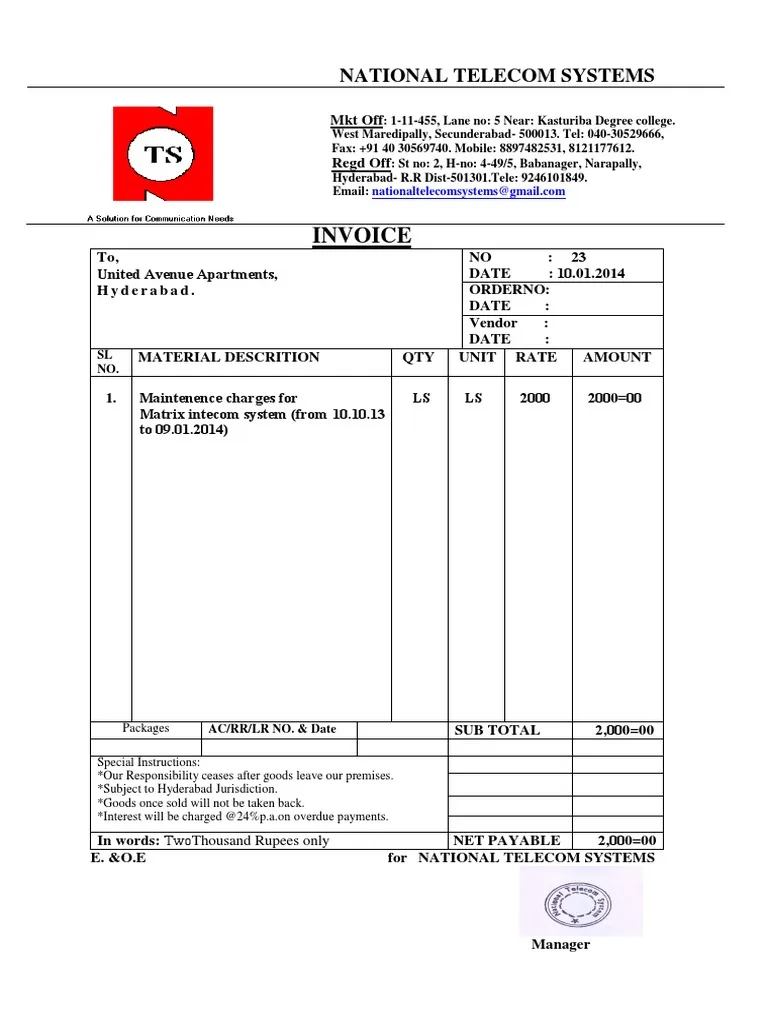
Photo: telecom invoice paperwork audit desk network cables, via imgv2-2-f.scribdassets.com
Somewhere in America, a 400-employee distribution company is paying roughly $40,000 a month for network connectivity. Nobody in the building can explain all of it. The CFO sees a single line item under "communications." The IT director inherited the bill from a predecessor who inherited it from someone else. This is not an anomaly — it is the default state of enterprise telecom spending, and it persists because invoices like this one are designed by carriers to be paid, not read.
What follows is an autopsy. We assembled a composite invoice based on pricing and contract patterns typical of US mid-market enterprises and traced every major charge back to the decision that created it. Use it as a template for your own review.
The Anatomy of the Bill
The invoice breaks into four layers, and each layer tells a different story about when and why the company bought connectivity.
Layer one: the MPLS estate. Eighteen sites ride legacy MPLS circuits at $650 to $1,100 per month each — roughly $14,000 monthly. The contract dates to 2014, signed when MPLS was the only credible option for a retailer linking stores to a data center. Twelve of those sites now also have broadband or DIA connections for cloud traffic. The MPLS circuits are carrying a fraction of their original load, but nobody decommissioned them because the term agreement runs through next year and the penalty math was never done.
Layer two: the DIA buildout. Six dedicated internet access lines, added between 2019 and 2022 to support Microsoft 365 and a move to AWS, total about $9,500 per month. These are defensible — but two of the six were sized at 1 Gbps when 500 Mbps would have sufficed, a decision made during pandemic-era panic provisioning that was never revisited.
Layer three: the zombie circuits. Here lies the graveyard. A T1 at a warehouse that closed in 2021: $440 per month. A cable circuit at a former sales office: $310. A 4G failover SIM for a site that now has two fiber paths: $180. Total: roughly $1,100 a month, or $13,000 a year, paying for nothing. Zombie circuits survive because disconnecting a circuit requires a ticket, a carrier phone tree, and a name — and no one owns the process.
Layer four: the fees. Overage charges on burstable 10G ports, regulatory surcharges, equipment rental on routers the company could have bought outright years ago. This layer is smaller — maybe $3,000 monthly — but it is the layer that grows, quietly, every billing cycle.
How to Run Your Own Audit
Start with the invoice, not the inventory. Carriers' records and your asset database will disagree, and the invoice is what you are actually paying. For every circuit, capture five data points: circuit ID, site, bandwidth, monthly cost, and contract end date.
Then do two things with that spreadsheet. First, sort by contract end date ascending — this is your negotiation and migration calendar, and it is the single most valuable artifact in any WAN refresh. Second, trace utilization. A circuit below 30 percent sustained utilization for two consecutive quarters is a candidate for downsizing or elimination.
The Early-Termination Trap
The reason zombie circuits and redundant MPLS links survive is the early-termination fee, and the fear of it is usually worse than the reality. ETFs on legacy MPLS contracts are typically calculated as remaining monthly charges times a discount factor — often 60 to 80 percent, and negotiable, especially when the carrier believes you might port the business to a competitor.
The winning move is sequencing. Migrate sites as their contracts expire naturally, even if that stretches the project over 18 months. Where an ETF does apply, ask the new SD-WAN or carrier provider to absorb it — competitive providers routinely credit termination fees as a customer acquisition cost. Get that offer in writing before you sign anything.
Turning the Autopsy Into a Business Case
The composite company above can realistically cut $11,000 to $14,000 per month by exiting zombie circuits, right-sizing two DIA lines, and migrating twelve low-traffic sites from MPLS to SD-WAN over broadband. That is $150,000-plus annually, fundable in a single budget cycle, with a network that is easier to manage and better suited to cloud traffic patterns.
The lesson is not that MPLS is bad or that carriers are villains. It is that network spending accumulates like sediment — each layer reasonable at the time it was deposited. An annual invoice audit, owned by a named person with a named deadline, is the difference between a WAN that reflects your current business and one that memorializes every decision you made since 2014.