Your Zero-Trust Program Is Doomed If It Stops at the Firewall

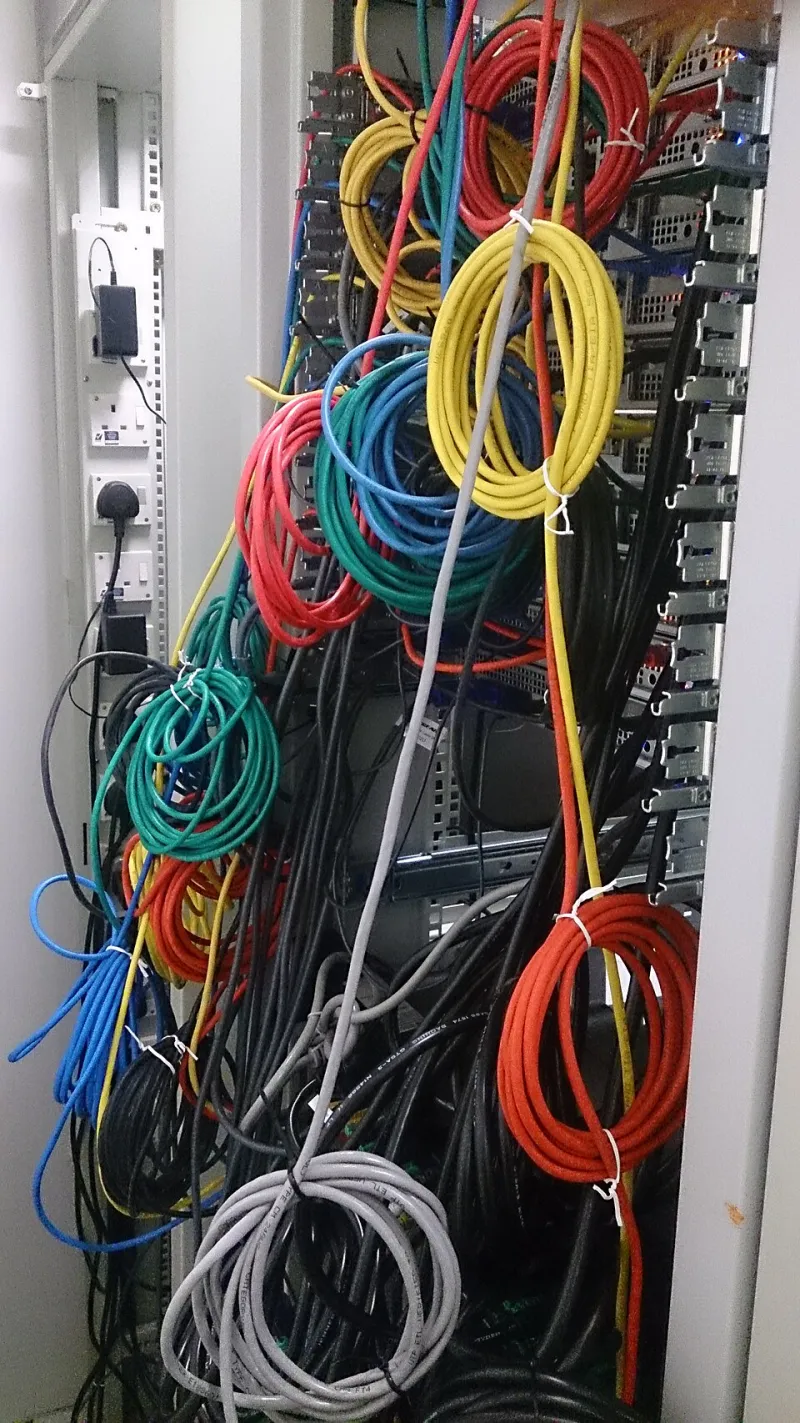
Photo: cybersecurity network segmentation data center dark servers, via img.freepik.com
Zero trust has become the most quoted and least practiced concept in enterprise security. Federal mandates — including the executive order that pushed agencies toward zero-trust architectures — have made the phrase unavoidable in every RFP and board deck. Yet walk into most American enterprises attempting the transition and you'll find the same pattern: identity providers deployed, MFA everywhere, a shiny SASE vendor selected — and a flat Layer 2 network underneath it all that would be recognizable to an administrator from 2005.
That is not zero trust. That is zero trust with a trapdoor.
The Perimeter Didn't Shrink. It Moved.
The orthodox framing says the perimeter dissolved. More accurately, the perimeter migrated. In a software-defined environment, the fabric itself — the switches, the overlays, the policy engines that decide which workloads can talk — is the most granular enforcement point you own. Ignoring it means your zero-trust program secures the front door while leaving the interior doors wide open.
The evidence is in the breach reports. Lateral movement remains a feature of nearly every major US incident post-mortem: attackers land on a single compromised endpoint, discover that east-west traffic is unpoliced, and spend weeks wandering laterally before anyone notices. Perimeter-focused zero trust does nothing to stop this. Microsegmentation does.
What the Fabric Actually Enforces
In an SDN-based data center or campus, policy is decoupled from topology. That means you can express intent — "the billing application may speak to the database on port 1433 and nothing else" — and the fabric enforces it everywhere, consistently, without depending on VLAN gymnastics or ACL sprawl.
This is the difference between aspirational and auditable. A zero-trust policy that lives in a spreadsheet is a wish. A zero-trust policy compiled into the fabric's distributed enforcement points is a control you can demonstrate to an auditor, an insurer, or — increasingly relevant — the federal government.
Rolling It Out Without Breaking 1998
The objection is always the same, and it's legitimate: legacy applications. The payroll system that only works when everything can reach everything. The vendor appliance hardcoded to a specific subnet. Here is a pragmatic sequence that has worked in enterprise environments:
- Observe before you enforce. Deploy the fabric's telemetry in monitor-only mode. Most platforms will build a traffic baseline automatically. You cannot segment what you cannot see.
- Segment by blast radius, not by org chart. Start with the workloads whose compromise would hurt most — domain controllers, backup systems, payment infrastructure. These are also usually the most stable, well-documented applications.
- Use a default-deny allowlist per application, not per server. Model policies around application dependencies. This keeps policy count manageable and survives server rebuilds.
- Keep a documented exception path. Legacy systems that genuinely require broad access get explicit, time-reviewed exceptions. The point is not purity; it is visibility into every deviation.
- Automate drift detection. The moment someone adds a firewall exception by hand outside the policy engine, your zero-trust story starts decaying. Let the fabric flag it.
The Uncomfortable Conclusion
If your zero-trust roadmap has no line item for the network fabric, it is a roadmap to a false sense of security. Identity is necessary; it is not sufficient. The east-west paths inside your data center and across your campus are where attackers actually live, and only microsegmentation at the fabric level closes them.
The good news for engineers: if you've already invested in SDN — and most US enterprises have, whether they call it that or not — the enforcement infrastructure is already in your racks. The hard part was never the technology. It was deciding to treat the network as the security boundary it already is.