From Fries to First Downs: The Invisible SDN Fabric Behind Everyday American Life
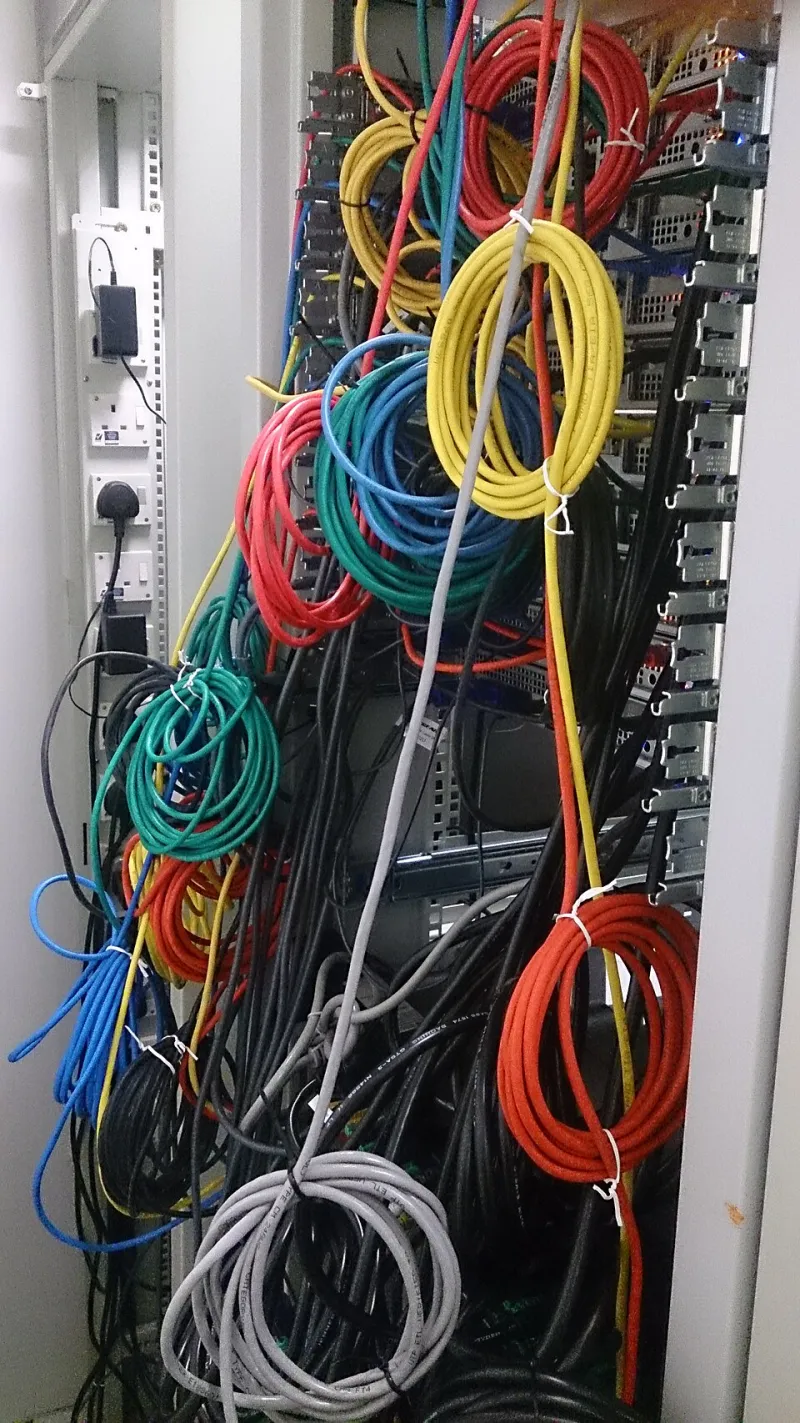
Photo: ProjectManhattan, CC BY-SA 3.0, via Wikimedia Commons
Most Americans will interact with software-defined networking a dozen times before lunch and never know it. The latte ordered through a mobile app, the prescription refilled at a rural pharmacy, the scoreboard replay at a Sunday game — each depends on network architectures that were practically science fiction twenty years ago. SDN's promise has always been abstraction: separate the control plane from the hardware, and suddenly a network becomes programmable, resilient, and observable at scale. That promise has quietly been fulfilled in some of the least glamorous corners of the economy.
The Drive-Thru Is a Distributed System
Consider the fast-food lane. A modern quick-service restaurant is less a kitchen than a small data center with a fryer. Point-of-sale terminals, kiosks, mobile order pickup displays, drive-thru timers, and payment processors all compete for bandwidth on a store network that typically has one inexpensive WAN link to the outside world.
Chains operating thousands of locations cannot send network engineers to each site. Instead, they deploy SD-WAN controllers that manage policy centrally: payment traffic gets priority and often a dedicated path (sometimes even an LTE backup), while the crew's streaming music degrades gracefully when the link is congested. When a fiber cut takes the primary circuit down mid-lunch-rush, the controller reroutes transactions over broadband or cellular within seconds — the difference between a brief blip and a shuttered lane with a line of idling cars.
The failure mode is instructive. When these architectures are done poorly — static configurations, no application-aware routing — a single ISP outage becomes local news. When they're done well, the customer simply gets their order.
Telemedicine Where the Nearest Specialist Is 90 Miles Away
Rural health clinics present a different calculus. A telemedicine session with a specialist in a metropolitan hospital system cannot tolerate jitter the way a video call with relatives can; a frozen frame during a remote stroke assessment is a clinical problem, not an inconvenience.
Regional health networks increasingly use SDN principles to segment clinical traffic from guest Wi-Fi and administrative systems, then steer telehealth sessions across the cleanest available path. Because the control plane is centralized, a hospital IT team of six can enforce consistent policy across dozens of small clinics — sites that historically ran on whatever the local ISP could provide and a hope.
The stakes are concrete. During weather events, clinics with programmable failover have maintained connectivity to patient records while neighboring facilities went dark. That is not marketing language from a vendor deck; it is the practical outcome of being able to re-route traffic with software rather than a truck roll.
Eighty Thousand Devices, One Fabric
Nowhere is the challenge more visible than in a packed NFL stadium. On game day, a venue might host 70,000-plus smartphones, plus point-of-sale systems, ticket scanners, security cameras, digital signage, and the media. Designing that network is an exercise in controlled chaos.
Modern stadium networks use SDN-based segmentation to quarantine device classes from one another: a fan's phone has no business reaching the concession stand's payment terminal, and neither should touch the physical security systems. Controllers dynamically adjust capacity by zone — weighted toward concourses before kickoff, toward suites and press areas during halftime. Some venues push real-time analytics over the same fabric, adjusting concession staffing based on queue data.
When it works, fans upload fourth-quarter highlights without a second thought. When it doesn't, the failure is public in a way few enterprise outages ever are: thousands of people simultaneously unable to post, pay, or scan their tickets.
The Common Thread
Three industries, one architectural idea. Whether the traffic is a hamburger order, an echocardiogram, or a touchdown replay, the pattern holds: centralize control, segment aggressively, automate failover, and treat the WAN as software rather than a set of boxes.
For network professionals, the lesson is that SDN's most important deployments are rarely the ones that make conference keynotes. They are the unremarkable, reliable networks that let ordinary American commerce and care proceed without anyone — customer, patient, or fan — ever thinking about the wiring underneath.