The Chassis Tax: Why Your Next Switch Refresh Should Be a Software Decision
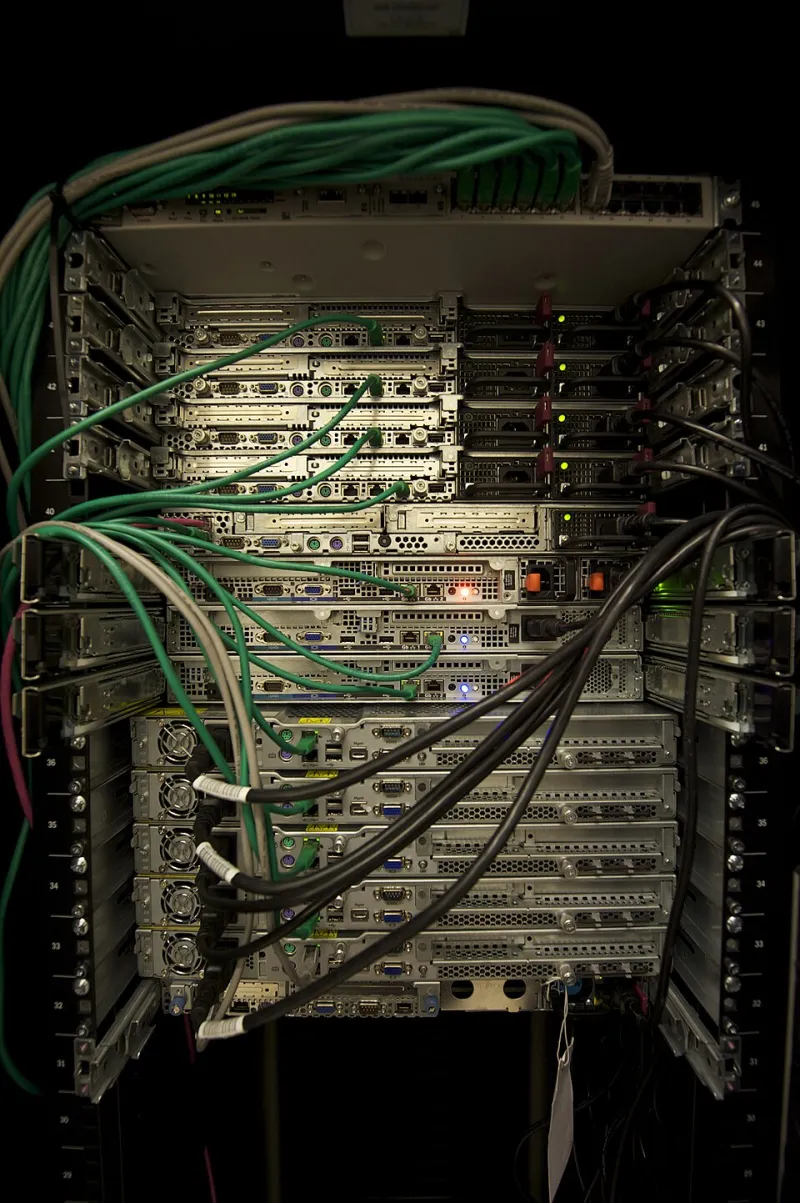
Photo: Abigor, CC BY-SA 3.0, via Wikimedia Commons
There is a moment in every switch refresh cycle when the spreadsheet stops making sense. You have priced out the hardware, added the licenses, and the total lands forty percent above last cycle — for gear whose most advanced capabilities will sit behind additional subscription tiers you have not even purchased yet.
If that moment has arrived on your desk, pause before signing. The way most enterprises buy switching hardware was designed for an era when the control plane lived inside the chassis. That era is over. What follows is a candid look at five signs your refresh strategy is obsolete, and a checklist for what to do instead.
Sign One: Features Are Behind the License Wall
The clearest tell is when the datasheet advertises capabilities your purchase order does not include. VXLAN? That is the Advanced tier. Full telemetry streaming? Advanced Plus. MACsec? Contact your account team.
When a vendor gates functionality by subscription rather than by silicon, you are not buying hardware — you are renting software with a very expensive delivery mechanism. Worse, license tiers create forecasting problems: the switch you buy today may not support the feature you need in year three unless you pay again, retroactively, across the entire fleet.
Sign Two: The Controller Is the Product
Many modern switching platforms are unusable, or nearly so, without their cloud controller. Configuration, firmware, troubleshooting — everything routes through the vendor's management plane. Some organizations like this. But read the fine print on what happens when the subscription lapses or the vendor changes terms. If your network's manageability is contractually contingent, you have traded a hardware dependency for a larger one.
A healthy SDN architecture treats the controller as replaceable infrastructure, not as the network's heartbeat. Ask any vendor you are evaluating: if we stopped paying tomorrow, what exactly stops working?
Sign Three: You Are Paying for Redundant Silicon
Chassis-based switching made sense when a single box had to concentrate the control plane, the fabric, and the power budget in one rack. Distributed architectures — spine-leaf topologies, EVPN-based fabrics, host-based routing — have eliminated most of those constraints. Yet the pricing still reflects the chassis era: premium margins on redundant supervisors, fabric modules, and the proprietary optics they require.
Run the numbers on a comparable whitebox or brite-box deployment with an open NOS and an off-the-shelf optical transceiver. In many access and aggregation scenarios, the hardware cost differential funds a full-time automation engineer for two years. That trade increasingly favors the engineer.
Sign Four: Your Automation Plan Requires Screen Scraping
If your network automation roadmap assumes CLI parsing, expect-first scripts, and per-device templates, your hardware vendor has already won. Platforms that expose full model-driven APIs — YANG-based telemetry, gNMI streaming, declarative configuration — let automation tools treat the fleet as one logical system. Platforms that do not will quietly tax every automation initiative you fund.
Ask vendors to demonstrate a complete configuration change pushed through their API, including validation and rollback, in a live environment. Vendors confident in their software will oblige. Vendors whose APIs are marketing veneer will schedule a follow-up call.
Sign Five: The Refresh Timeline Is Still Five Years
Hardware refresh cycles were calibrated to silicon lifespans and forklift upgrades. Software-defined switching inverts this: the silicon matters less than the software release cadence, and capability now arrives through subscription updates rather than hardware generations. A five-year refresh calendar applied to an SDN-ready platform means you will be three software generations behind at cutover and paying maintenance on capabilities you could have had for free.
The Pre-Purchase Checklist
Before your next capital request goes forward, put every candidate platform through this filter:
- API completeness: Can every CLI operation be performed through a documented, versioned API? Test the edge cases, not the demos.
- License portability: If you change vendors or architectures in year four, do your licenses transfer? In writing?
- Controller independence: Does the network forward traffic and maintain configuration if the management plane disappears for a week?
- Open standards exposure: EVPN/VXLAN, model-driven telemetry, standard optics. Proprietary fabric protocols are a lock-in bell.
- Whitebox parity: Does the vendor offer, or permit, the same software on merchant silicon? If not, ask why.
- Total cost over seven years: Hardware, licenses, support, optics, and the engineering time to operate it. Not the sticker price.
The Honest Caveat
None of this means every incumbent platform is a bad purchase. Some enterprises genuinely want vendor-operated management planes, and for lean teams, that trade can be rational. The failure mode is not buying a managed platform — it is buying one by default, without pricing the alternative, because the capital process has always worked that way.
The switch refresh is no longer a hardware decision with software attached. It is a software decision with hardware attached. Budgets that recognize this will fund automation, talent, and optionality. Budgets that do not will keep paying the chassis tax, cycle after cycle, for architecture that stopped making sense years ago.