Before You Trust the Résumé: Building a Hands-On Lab That Exposes Real Network Talent
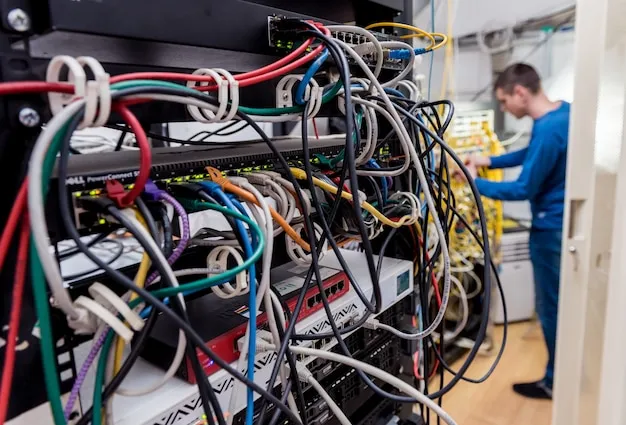
Photo: network engineer laptop lab cables testing server room, via img.freepik.com
Every hiring manager in American enterprise IT has lived the same disappointment: a candidate with a spotless résumé, a wall of certifications, and fluent answers about BGP path selection — who then freezes the moment a real ticket lands on their desk. The gap between interview performance and production competence is not a character flaw. It is a design flaw in the interview itself.
The fix is surprisingly affordable. With a laptop, a container lab, and an hour of structured scenarios, you can watch a candidate actually work — and learn more in that hour than a panel of behavioral questions will ever tell you.
Why the Traditional Interview Fails Networkers
The standard interview format rewards recall, not reasoning. Ask a candidate to explain the TCP three-way handshake and you are testing memory. Ask them why a finance application in your Denver office times out only during backup windows and you are testing judgment. These are different cognitive tasks, and only one of them resembles the job.
There is also an equity problem worth naming. Candidates who memorize question banks from interview-prep sites can outperform stronger engineers who spend their time actually operating networks. A hands-on format partially corrects this imbalance, because there is no question bank for a broken lab.
Finally, the stakes have changed. Modern networks are heavily automated, which means a single bad change propagates further and faster than it did in the CLI-only era. Handing production access to an unverified troubleshooter is no longer a contained risk.
Designing the Lab: Keep It Small, Keep It Honest
Your lab does not need to mirror production. It needs to be diagnostic — rich enough that something can break in interesting ways, small enough to run on a laptop.
A workable baseline includes:
- Three to five virtual network nodes (EVE-NG, GNS3, Containerlab, or Cisco Modeling Labs all work) with a mix of routing and switching
- One containerized application — even a simple web server gives you something to reach or fail to reach
- A packet capture point positioned where the interesting traffic flows
- Deliberately seeded faults, each with a known root cause and a realistic symptom
The cardinal rule: the fault must be plausible. A shutdown interface teaches nothing because everyone checks for it first. A subtle MTU mismatch on one path, a misapplied ACL that only blocks return traffic, a next-hop that blackholes traffic for one subnet — these are the failures that actually fill your ticket queue on a Tuesday morning.
The Scenario Structure That Reveals Instincts
Structure the exercise as a single hour with three escalating phases.
Phase one: orientation (ten minutes). Give the candidate documentation — topology diagram, IP plan, and a vague complaint: "Users say the reporting app is slow. Good luck." Then watch what they do first. Strong engineers build a mental model before touching anything. They ask about what changed, trace the path, and establish a baseline of what is working. Weak engineers start typing commands in whatever order muscle memory suggests.
Phase two: live troubleshooting (thirty minutes). Introduce the fault and let them work. Resist the urge to help. The most revealing moments are the quiet ones: does the candidate form a hypothesis and test it, or hop randomly between tools? Do they use the packet capture, or ignore it because they have never actually read a pcap under time pressure?
Watch specifically for these behaviors:
- Dividing the problem. "Can I reach the gateway? Can I reach anything past it?" — bisecting the path is the hallmark of a real troubleshooter.
- Reading evidence before theorizing. Candidates who open the pcap and describe what the packets actually show, rather than what they assume, are rare and valuable.
- Knowing when to stop. An engineer who says "here is what I would check next if I had more time" demonstrates production maturity better than one who thrashes until the clock runs out.
Phase three: the fix and the writeback (twenty minutes). Ask them to propose the fix — and then the questions that matter most: How would you make this change safely? How would you verify it worked? How would you document it? In an automated environment, the answer should reference version control, peer review, and rollback plans. A candidate who proposes pasting commands directly into a production device during business hours is telling you something important.
The Questions That Separate Memorizers from Problem-Solvers
Beyond the lab, a few well-chosen questions expose depth of understanding:
- "You fixed it, and it broke again the next day. What does that tell you?" Tests root-cause discipline versus symptom-chasing.
- "You have two hypotheses that both fit the evidence. Walk me through how you'd choose." Tests methodical reasoning under ambiguity.
- "What is the last thing you automated, and what did you break doing it?" Tests honesty and automation fluency simultaneously. Everyone who automates has broken something; the ones who learned from it are the ones you want.
- "What would you have checked first if you'd had five more minutes?" Tests self-awareness about their own process.
Notice what these questions have in common: none has a canonical answer floating around interview-prep forums. They can only be answered by someone who has actually operated a network.
Scoring Without Theater
Grade against a simple rubric — hypothesis formation, evidence gathering, technical breadth, safety practices, and communication — and score each during the session, not from memory afterward. Have a second engineer review the notes to counteract individual bias. And calibrate across candidates: the same lab, same faults, same hour, every time. Consistency is what turns an interview from a conversation into a measurement.
One caution: tell candidates the format in advance. Springing a live lab on someone is not a stress test; it is a bad-faith filter that screens out people who are simply nervous. The goal is to observe how they think when they are at their best, because that is what they will give your network.
The Bottom Line
The network engineering market in the United States remains tight, and the cost of a bad senior hire — in outages, in churn, in team morale — dwarfs the cost of building a proper interview lab. A few evenings of setup buys you something no certification can: direct evidence of how a candidate behaves when the packets stop flowing. In a discipline built on verification, it is remarkable how rarely we verify the people we trust with the fabric.